The Wedding Dress
Ball Gown Wedding Dress: Princess Drama, Decoded
The fairytale full-skirt silhouette — crinoline and hoop construction, who it flatters most, venue fit, weight and movement trade-offs, and the designers leading the 2026 ball-gown revival.
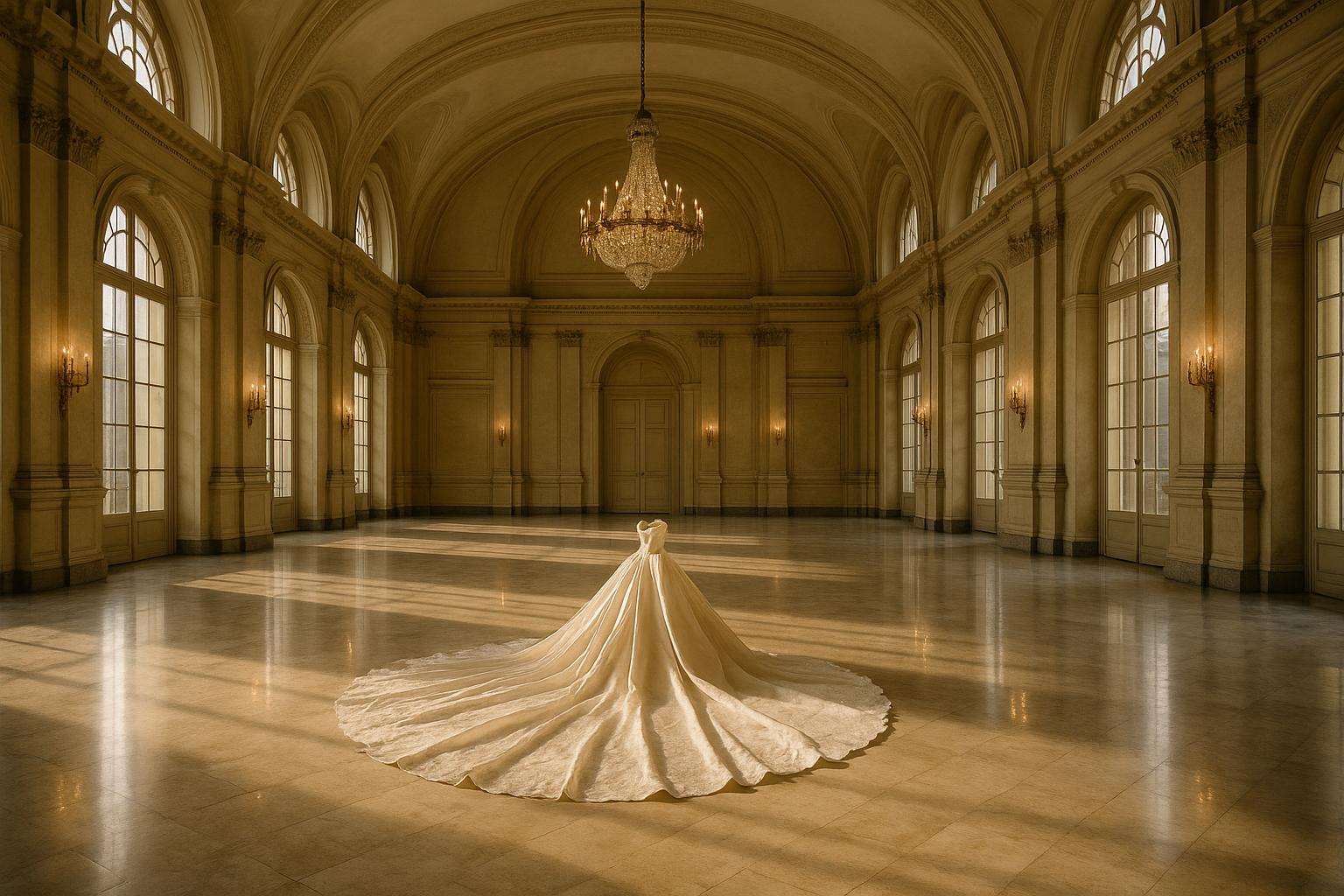
A ball gown wedding dress is defined by a fitted, structured bodice and a dramatically full skirt that flares from the natural waistline to the floor — the most architecturally complex bridal silhouette, held in shape by layers of crinoline netting and petticoats beneath the outer fabric. It is the fairytale silhouette for grand venues, long aisles, and brides who want their entrance to mean something.
There is a reason brides have reached for the ball gown for generations. No other silhouette commands a room in quite the same way — not the sleek column, not the romantic A-line, not the fitted mermaid. The ball gown is architecture. It is a statement that begins the moment a bride appears in a doorway and does not relent until the last note of the final dance. But it is also, beneath all that beauty, an engineering problem: layers of hidden structure working in concert to hold a dream aloft. Understanding that structure is the first step to choosing the gown with confidence.
What gives a ball gown wedding dress its shape?
The silhouette depends on two systems working in tandem: the bodice above the waist and the underpinnings below it.
The bodice of a ball gown is the most labour-intensive component. It must support the bust, sculpt the waist, and bear the weight of the skirt — and in strapless or backless designs, it must do all of this through internal structure alone. Key elements include boning (thin strips of plastic or steel sewn into the seams to lift and shape the torso), a built-in corset or sewn-in bra cups (which eliminate the need for an external bra and keep the gown stable through a full day of movement), and a lining and interlining that govern how the gown feels against the skin and how heavier outer fabrics hold their form.
Beneath the skirt, a crinoline is the essential foundation. The word originates from the French term for the horsehair-and-cotton fabric used in nineteenth-century underskirts, and today refers to stiffened netting — layered and shaped to push the skirt outward and give it bounce. Without adequate crinoline support, even the most exquisitely cut ball-gown skirt will collapse into shapeless fabric. A crinoline may be sewn permanently into the gown by a seamstress, worn as a separate removable petticoat, or both.
What is the difference between a crinoline and a petticoat, and which type gives the most volume?
A crinoline is one specific type of petticoat — distinguished by its structural rigidity. A petticoat is the broader category: any underskirt worn beneath a dress to add volume, warmth, or shape. The table below summarises the main petticoat types a bride will encounter in the fitting room, drawn from guidance by Lovella Bridal and accessories specialist Velo Bianco:
| Type | Construction | Volume Level | Best For |
|---|---|---|---|
| Tulle petticoat | Multiple soft tulle layers, no rigid structure | Moderate to high | Flowing, romantic fullness; lighter feel; comfortable for long receptions |
| Crinoline petticoat | Stiff netting layers, often multiple tiers | High | Maximum structure; formal ball gowns; defined, crisp silhouette |
| Hoop skirt / layered hoop | Fabric layers with sewn-in steel or plastic hoops | Maximum | Widest width without fabric weight; vintage or highly dramatic silhouettes |
| Combination petticoat | Mix of tulle and crinoline layers | High | Adjustable volume with moderate structure; versatile for most ball gowns |
| A-line petticoat | Lighter, tapered layers | Low to moderate | Slim A-line gowns; gentle flare only — not suited to dramatic ball gowns |
For the most dramatic silhouette, many bridal specialists recommend layering: a crinoline sewn permanently into the gown by a seamstress, topped by a removable hoop-skirt petticoat for the ceremony. The hoop can then be removed for the reception, freeing the bride to move and dance without sacrificing the entrance she wanted at the aisle.
What type of venues are best for a ball gown wedding dress?
The ball gown is not a silhouette that travels equally well to every setting. It performs best in spaces whose architecture matches its scale.
Grand ballrooms are the silhouette's natural habitat. High ceilings, wide aisles, polished floors, and generous floor space allow the skirt to move freely and photograph without compression. The Aragon Ballroom in Chicago, with its soaring Moorish arched ceilings, and the Alfred I. DuPont Building in Miami, with its marble floors and towering rotunda, are among the venues wedding photographers and planners most consistently associate with the ball gown's full impact.
Churches and cathedrals provide the long central aisle that transforms a ball gown's entrance into one of the most photographed moments in bridal fashion. A cathedral-length train — which can extend four to six feet beyond the hem — reads as genuinely grand in a space built to that scale, and reads as excessive in a small chapel or intimate garden room.
Historic estates, luxury hotels with grand staircases, and formal manor gardens all pair naturally with the formality of the silhouette. A black-tie dress code is a strong signal that a ball gown, a structured A-line, or a silk column is appropriate; the venue and the gown should be in conversation.
Conversely, a ball gown at a beach wedding presents practical difficulties — sand and surf impede movement and the hem will not survive the day clean. Intimate garden micro-weddings, rustic barn events, and outdoor picnic-style celebrations can feel overwhelmed by the silhouette's scale. The honest counsel is this: the gown should feel at home in the space, not compete with it.
What are the weight and movement trade-offs of wearing a ball gown?
A ball gown is the heaviest bridal silhouette. The combination of structured bodice, outer skirt fabric, and multiple underskirt layers — particularly in satin or heavily beaded gowns — can bring the total dress weight to ten pounds or more. Tulle ball gowns are considerably lighter than satin equivalents and are generally more comfortable over a twelve-hour wedding day. The fabric choice is not merely aesthetic: it governs how the bride will feel in hour eight.
Movement requires a small learning curve. Turning is done from the hips rather than the feet; sitting requires gathering the skirt slightly forward; stairs call for a lifted front hem and a trusted companion. Brides planning a reception with dancing should discuss bustle installation with their alterations specialist before the final fitting — a properly installed bustle loops the train up and out of the way, extending the night considerably. The bustle should be rehearsed: the bride and at least one bridesmaid should know how to fasten and release it without losing time at the reception.
Which designers are leading the 2026 ball-gown revival?
The ball gown has moved unmistakably back to centre stage in 2026 bridal, with designers at every price tier offering interpretations that range from structured tulle to hand-draped silk duchesse satin.
David's Bridal is the largest national bridal retailer in the United States, carrying ball gowns across hundreds of in-store and online styles, with options beginning below $100 and extensive choices under $500. The retailer also carries the Vera Wang Bride diffusion line, bringing Vera Wang design sensibility to accessible price points — an unusual pairing of heritage design credibility and mass-market reach.
Maggie Sottero is among the most widely stocked mid-range bridal brands in the US, with ball gowns ranging from approximately $1,400 to $3,300 depending on complexity. The label is known for sculpted corsetry, dimensional beading, illusion lace necklines, and voluminous tulle skirts, with a size-inclusive range from petite to plus sizes and a Personalize It! Program allowing brides to customise necklines, sleeve lengths, back treatments, and skirt overlays. Sister label Sottero & Midgley occupies the upper tier of the same house at $1,800 to $4,300. Allure Bridal operates in a comparable band and is available at boutiques nationwide. Kleinfeld Bridal in New York City — the salon made internationally known by TLC's Say Yes to the Dress — carries over sixty designers at mid-range through luxury, including Pnina Tornai, Randy Fenoli, Tony Ward, and Martina Liana. Kleinfeld recommends budgeting nine to twelve months and scheduling appointments two to three weeks in advance to access the full selection.
Vera Wang anchors the luxury end of the 2026 ball-gown market. Her Haute Wedding 2026 collection features gowns including Audriana — an Italian silk satin duchesse ball gown with a hand-draped peplum and silk faille bow — and Margaret, a featherweight silk faille ball gown with hand-pleated appliqué and a double bubbled hem. Both exemplify the sculptural use of Italian and French luxury fabrics for which Vera Wang is the definitive standard. Monique Lhuillier is positioned at the same tier, offering ball gowns that balance architectural structure with delicate lace, available through curated boutiques across the US.
The Knot's 2026 Real Weddings Study — based on 10,474 US couples married in 2025 — places the average wedding dress spend at approximately $2,100, with the national median around $1,800 and luxury spends reaching $10,000 and above. Brides should budget an additional $400 to $500 on average for alterations, which are especially involved for ball gowns: hemming a structured multi-layer skirt, installing a bustle, and adjusting built-in underskirts add fittings that simpler silhouettes simply do not require.
The ball gown has endured because it earns its drama honestly. It is not a casual choice — it asks something of the venue, the budget, and the bride's patience through a long and beautiful day. But for the bride who has always known she wanted the fairytale full skirt, that ask is entirely the point. Choose the construction wisely, invest in the alterations, and the dress will carry you.
Considered Counsel
Frequently asked
What is the difference between a crinoline and a petticoat for a wedding dress?
A crinoline is a stiff structured underskirt — or the stiffened netting woven into one — designed to hold a skirt's shape outward. The word traces to the French word for the original horsehair-and-cotton fabric used in mid-nineteenth-century underskirts. A petticoat is the broader category: any underskirt worn beneath a dress to add volume, shape, or warmth. A crinoline is one type of petticoat, distinguished by its structural rigidity. Modern brides may encounter crinolines sewn permanently into a ball gown's skirt, or worn as a separate removable layer beneath it. Without adequate crinoline support, a ball gown skirt collapses and loses the silhouette impact that defines the style.
Which petticoat gives the most volume under a ball gown?
For maximum volume, a hoop-skirt petticoat — which uses sewn-in steel or plastic hoops to push the skirt outward — produces the widest silhouette with the least fabric weight, because the structure is carried by the hoops rather than layers of netting. For a softer, more romantic fullness, multiple layers of stiff crinoline netting deliver impressive volume with a slightly more pliable shape. Many experienced bridal consultants recommend layering: a crinoline sewn permanently into the gown by a seamstress, topped by a removable hoop-skirt petticoat for the ceremony, which can be removed for the reception to ease movement on the dance floor. Lovella Bridal and Velo Bianco both confirm this dual-layer approach as the professional standard for dramatic ball gowns.
What type of venues are best for a ball gown wedding dress?
The ball gown performs best in spaces whose architecture matches its scale. Grand ballrooms are the silhouette's natural habitat: high ceilings, wide aisles, polished floors, and generous floor space allow the skirt to move freely and photograph without compression. Notable examples include the Aragon Ballroom in Chicago, with its Moorish arched ceilings, and the Alfred I. DuPont Building in Miami, with marble floors and a soaring rotunda. Churches and cathedrals are equally ideal — a long central aisle transforms a ball gown's entrance into one of the most photographed moments in bridal fashion. Historic estates, luxury hotels with grand staircases, and formal garden venues also suit the silhouette. Beach weddings, intimate garden micro-weddings, and rustic barn events are generally poor fits: sand impedes movement, narrow spaces compress the skirt, and the scale can feel at odds with the setting.
How much does a ball gown wedding dress cost in 2026?
The Knot's 2026 Real Weddings Study, based on 10,474 US couples married in 2025, places the average wedding dress spend at approximately $2,100, with the national median around $1,800. Ball gowns specifically span a very wide range by tier. At the budget end, David's Bridal carries gowns under $500, and some styles fall below $100. In the mid-range, Maggie Sottero ball gowns run $1,400 to $3,300 depending on embellishment and fabric complexity, while sister label Sottero & Midgley reaches $1,800 to $4,300. At the luxury tier, Vera Wang Haute and Monique Lhuillier gowns start around $5,000 and can exceed $10,000 for custom work. Brides should budget an additional $400 to $500 on average for alterations, which are especially involved for ball gowns due to the complexity of the underpinning layers and the precision required to hem a structured skirt correctly.
How far in advance should you order a ball gown wedding dress?
Bridal industry convention is to begin the gown search nine to twelve months before the wedding date. Ball gowns require more lead time than simpler silhouettes for two reasons: their construction is more complex — often involving hand-sewn beading, boned corsetry, and multiple structured underskirt layers — and rush production carries significant surcharges. Kleinfeld Bridal in New York City recommends scheduling your first appointment two to three weeks in advance to access their full designer selection. Once you have placed an order, most designers require sixteen to twenty weeks for production, leaving two to three months for alterations — particularly important for ball gowns, where hemming, bustle installation, and adjusting built-in underskirts add fittings that simpler silhouettes do not require.
Is a ball gown wedding dress flattering on every body type?
The ball gown works exceptionally well for pear-shaped and hourglass figures — the full skirt balances broader hips or draws the eye to a defined waist, while the structured bodice sculpts the torso. It is also one of the most forgiving silhouettes for brides who wish to minimize the hip and thigh area, since the skirt volume conceals rather than traces the lower body. For petite brides, a higher natural-waist seam line and a lighter tulle skirt keep the proportions from being overwhelmed. The silhouette is less commonly recommended for very tall brides seeking a streamlined look, or for apple-shaped figures where a structured bodice can accentuate the midsection — though the right construction, including a dropped waistline and flowing fabric, can mitigate this. Fitting appointments with an experienced consultant at a retailer like Kleinfeld Bridal or a Maggie Sottero-authorized boutique allow brides to assess construction options in person.
What are the weight and movement trade-offs of a ball gown?
A ball gown is the heaviest bridal silhouette. The combination of structured bodice, outer skirt fabric, and multiple underskirt layers — particularly in satin or heavily beaded gowns — can bring total dress weight to ten pounds or more. Tulle ball gowns are considerably lighter than satin equivalents, making them more comfortable over a long reception. Movement requires adjustment: a bride must learn to turn by pivoting from the hips rather than the feet, to gather the skirt slightly when sitting, and to have a plan for stairs. Building in a bustle for the reception allows the train to be looped up, freeing the bride to move, dance, and navigate the floor with ease. Alteration specialists like Margaux Delacroix note that bustle installation is among the most important alterations for ball-gown brides and should be tested and rehearsed well before the wedding day.