The Wedding Dress
Black Wedding Dress: The Bold Bride's Statement
The history, the designers, the fabrics, and the styling — everything a modern bride needs to choose, wear, and own a black wedding dress with total confidence in 2026.
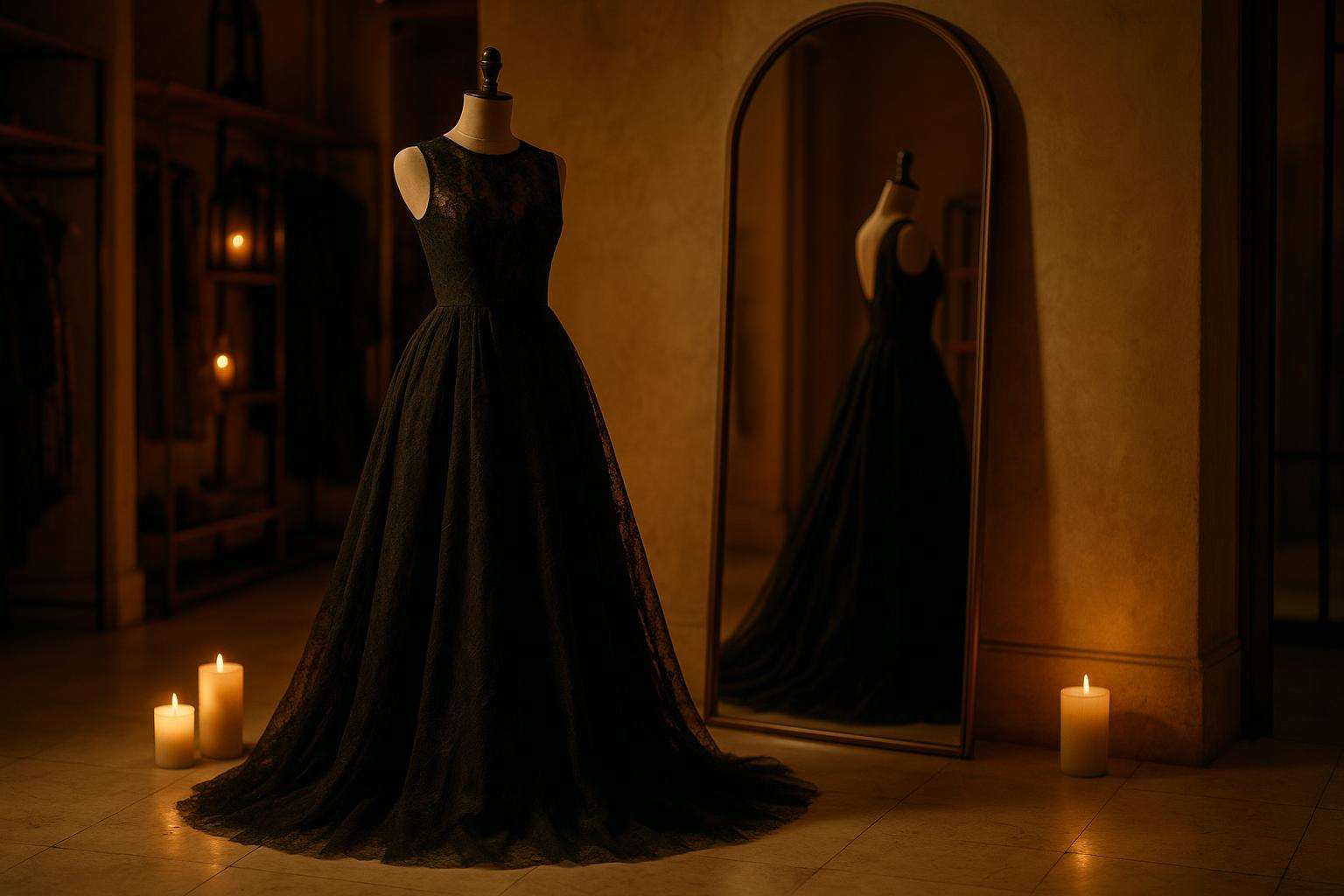
A black wedding dress is a historically grounded, designer-supported bridal choice in 2026 — not a provocation. From 16th-century Spanish Catholic brides who wore black silk as a vow of lifelong devotion, to Vera Wang's signature architectural noir, to Azazie's made-to-order gowns starting at $169, the black bridal gown is available at every price point and suits every bride willing to own the look.
Did brides ever traditionally wear black?
The assumption that brides have always worn white is a Victorian invention. Before Queen Victoria married Prince Albert in 1840 in a white Honiton-lace gown — a choice partly intended to showcase English lacemakers — brides across Europe routinely married in black, colourful, or simply their best dress of any hue. White became a bridal standard only as Victoria's influence spread globally through the second half of the 19th century.
The most documented pre-Victorian black bridal tradition belongs to Roman Catholic Spain. As far back as the 16th century, Spanish Catholic brides wore black high-necked silk gowns paired with a lace mantilla veil to their weddings. The colour was not funereal — it was devotional, embodying the bride's vow of lifelong commitment to her husband, a literal, wearable 'till death do us part.' The mantilla itself, made of intricate lace and fashionable from the early 17th century, also satisfied Roman Catholic Church requirements mandating shoulder coverage. As Spain gradually adopted white dresses through the 19th century, the mantilla alone survived as the enduring bridal custom.
In some Asian cultural contexts, black carries connotations of good fortune and prosperity rather than mourning, further diversifying how the colour reads across global bridal traditions. For a modern bride in 2026, choosing black is less a rupture with tradition than a return to a broader, more historically honest one — the tradition of a bride wearing what means something to her.
What was the celebrity moment that made black bridal mainstream?
No single moment did more to bring black bridal gowns into mainstream American consciousness than Sarah Jessica Parker's 1997 wedding to Matthew Broderick. Parker wore an off-the-rack Morgane Le Fay black gown at the Angel Orensanz Synagogue in New York City on 19 May 1997 — not as a fashion statement, but to avoid attention. "I felt too self-conscious to get married in white," she later told Marie Claire. "Both Matthew and I were hesitant about being the center of attention." She completed the look with teal blue velvet Robert Clerger heels.
Despite the accidental nature of the choice, it triggered a measurable shift: black and non-white bridal gowns began trending within months of the ceremony. Parker has since said she would choose white if she could redo the day — which makes the cultural weight of her accidental choice all the more significant. An outfit chosen to disappear into the background became one of the most-referenced moments in modern bridal fashion history.
What designers make black wedding dresses in 2026?
Black wedding dresses are available from real designers across every price tier — this is no longer a specialist or custom-order niche.
Vera Wang has been the most consistent champion of black in mainstream bridal fashion. The Vera Wang Bride x Pronovias 2025 collection — described by the brand as featuring "touches of modern goth, dramatic statement decorations, new corset constructions, minimalist designs, and a signature use of black" — is available through Pronovias stores and verawangbride.com. The 45-piece collection includes fitted black bodices with intricate lace details and voluminous skirts, as well as sculptural silhouettes in black tulle and organza. Wang's approach positions black not as an edgy outlier but as a design-forward alternative within an otherwise white-dominant collection.
BHLDN, Anthropologie's bridal brand, carries black gowns within a price range of approximately $350 to $3,500, with the majority of styles between $850 and $2,000. Known for romantic, vintage-inspired silhouettes in satin, lace, tulle, mikado, chiffon, and organza, BHLDN black styles also appear on resale platforms such as Still White, Nearly Newlywed, and Poshmark for meaningful savings. BHLDN sizing extends to size 26 in approximately half of its styles, making it one of the more inclusive accessible-luxury options.
Brooklyn-based designer Andrea Pitter of Pantora Bridal (4224 Church Ave, Brooklyn, NY) built her brand to serve brides underrepresented in mainstream bridal retail. Featured in Vogue Paris, Brides, and Essence, Pantora is carried at Kleinfeld Bridal and offers many designs in non-traditional colours including black, made to order for all body types.
Azazie maintains a dedicated black wedding dress category with made-to-order gowns priced from approximately $169 to $799. Specific 2025–2026 styles include the Caity ($169), Elyse ($379), Estephanie ($599), and Empiria ($799). Fabrics span chiffon, satin, velvet, lace, and tulle, with customisation of length, neckline, and sleeves available on most styles.
At the couture apex, Ines Di Santo's Fall 2025 collection features architectural structured silhouettes with black-capable options. Pricing for the mainline bridal assortment runs $6,000 to $15,000; specialty styles reach $12,000 to $17,000; and the more accessible Ines by Ines Di Santo line ranges $3,500 to $6,400.
Kleinfeld Bridal in New York carries black wedding gowns across its 30,000-square-foot showroom, with luxury designers including Pnina Tornai, Ines Di Santo, Rivini, and Tony Ward among those offering noir-adjacent or fully black styles. Kleinfeld Again, the retailer's pre-owned arm, stocks sample and pre-worn black gowns at accessible price points.
| Designer / Retailer | Price Range | Black Offering | Best For |
|---|---|---|---|
| Azazie | $169–$799 | Dedicated black category; made-to-order custom sizing | Budget-conscious bride; custom fit without couture price |
| BHLDN (Anthropologie) | $350–$3,500 | Black styles in satin, lace, tulle; sizes to 26 | Romantic aesthetic; inclusive sizing; accessible luxury |
| Pantora Bridal | Mid-luxury (carried at Kleinfeld) | Made-to-order in black; designed for all body types | Custom colour; inclusive representation; Brooklyn atelier |
| Vera Wang Bride x Pronovias | Mid-to-luxury | 45-piece 2025 collection with signature black pieces | Architectural noir; modern goth; designer provenance |
| Kleinfeld Bridal | Varies by designer | Pnina Tornai, Ines Di Santo, Rivini, Tony Ward | Full-service bridal; try-on in NYC; wide designer range |
| Ines Di Santo | $3,500–$17,000 | Fall 2025 couture; structured black silhouettes | Couture investment; formal black-tie wedding |
| Kleinfeld Again | Sample / pre-owned pricing | Pre-owned and sample black designer gowns | Luxury at a fraction of retail; sustainable choice |
What fabric is best for a black wedding dress — lace, satin, or tulle?
Fabric determines how black reads — from moody and dense to ethereal and dramatic. The choice should be made in dialogue with the venue, the season, and the dress's silhouette.
Black tulle is the most theatrical option. Lightweight and sheer, it creates volume without weight, and layering allows the designer to control the intensity of the black — from a subtle, gauzy shadow to a full, opaque presence. Multiple tulle layers produce transparency effects under soft lighting that no other fabric can replicate. Vera Wang's signature architectural pieces and structured A-line and ball-gown silhouettes lean heavily on black tulle. It works across all dress lengths and looks particularly striking in a full-skirt silhouette photographed under low directional lighting.
Black Duchess Satin delivers structure and a high-sheen finish that reflects light dramatically. It favours sleek, body-conscious silhouettes — mermaid, trumpet, and fitted column styles — and suits black-tie or formal winter receptions. Satin is prone to wrinkling and water spotting, so it requires careful handling through the day, and an experienced seamstress for alterations.
Black lace — particularly Chantilly (lightweight, delicate floral patterns) and Alençon (thicker, raised edges, bolder motifs) — adds visual depth, romance, and texture that is uniquely bridal. Lace overlaid on a black satin underlining creates intimacy and vintage richness; it dominates the backless and 'modern gothic' aesthetic at Kleinfeld Bridal. Real lace is fragile and requires an experienced hand for alterations.
Combining fabrics is common and strongly recommended in black gowns: a satin underlayer with a lace overlay, or a tulle skirt paired with a satin bodice, yields depth of character and contrast that a single-fabric construction cannot achieve. For warmer venues or outdoor summer settings where a black gown is non-negotiable, lighter options — chiffon, organza, or lightweight tulle — reduce both visual weight and the physical heat the fabric absorbs.
What venues are best for a black wedding dress?
Black wedding dresses perform best in specific environments — and the honest assessment includes where they struggle.
Best settings: Evening or candlelit indoor ceremonies; black-tie ballroom receptions; city hotels and urban venues; fall and winter weddings; gothic or atmospheric spaces including historic mansions, castles, and industrial lofts. Evening and ambient lighting is particularly flattering to textured black fabrics like velvet, beaded lace, and satin, which need directionality to reveal their depth and surface beauty.
Challenging settings: Daytime outdoor ceremonies where black reads heavy and absorbs heat in direct sunlight; beach or tropical destination weddings where formality and practicality conflict; casual garden parties where the colour can feel somber against natural greenery and afternoon light. Vera Wang's editorial guidance on choosing a wedding dress for outdoor settings specifically notes that terrain, temperature, and natural lighting should drive fabric and colour selection — factors that disfavour dense black fabrics in warm weather.
Seasonal guidance: Velvet and Duchess Satin are the natural choices for fall and winter receptions. Chiffon, organza, and lightweight lace are the practical options for warmer settings where a black gown remains the goal. The fabric choice is as important as the colour itself in ensuring the bride is comfortable for the full day.
How do I style a black wedding dress — and talk to my family about it?
Styling a black wedding dress is largely about managing the bridal signal — ensuring the overall look reads as celebration, not solemnity, and that guests can arrive at joy without confusion.
Accessories that work: A white, ivory, or blush bridal bouquet provides the clearest bridal signal and photographs beautifully against black fabric. A white or champagne veil anchors the look firmly in bridal territory — it is one of the most powerful single additions a bride can make. For jewellery, gold — whether antique or modern — is the most harmonious metal against black, adding warmth rather than the starkness of silver or platinum. Pearl jewellery brings a heritage-register quality that suits black lace in particular. Nude or metallic heels lengthen the leg without competing with the gown. Deep jewel-toned shoes — burgundy, sapphire, deep green — offer a considered colour-accent approach. SJP's teal blue velvet Robert Clerger heels with her Morgane Le Fay black gown remain one of the best-remembered examples of this done right.
Talking to family: Bridal etiquette sources and Kleinfeld Bridal consultants consistently recommend communicating the choice early — not as a surprise on the wedding day — and framing it with intention. Sharing the historical context (Spanish Catholic tradition, the personal meaning of the vow symbolism) can transform a potential concern into a conversation. Be aware of cultural nuance: in South Asian, Chinese, and some Eastern European traditions, black at weddings carries specific meanings unrelated to contemporary bridal fashion. Research the traditions of family members who will be in attendance. The modern standard, as Azazie's editorial team notes, is that no dress code rule prohibits a bride from wearing black — it is entirely a personal and deeply meaningful decision.
History: choose knowing the colour has a 500-year bridal heritage. Designer: Azazie ($169–$799), BHLDN ($350–$3,500), Pantora Bridal (custom, via Kleinfeld), Vera Wang x Pronovias (mid-luxury), Ines Di Santo ($3,500–$17,000). Fabric: tulle for volume, Duchess Satin for sleek formality, Chantilly lace for vintage romance. Venue: best in evening, candlelit, or black-tie settings; challenging in daytime outdoors or beach. Styling: white veil, blush bouquet, gold jewellery. Communication: tell family early, bring context, let the dress speak for itself on the day.
Considered Counsel
Frequently asked
Is it OK to wear a black wedding dress?
Absolutely — there is no wedding etiquette rule that prohibits a bride from wearing black. Bridal authorities including Azazie's editorial team and Kleinfeld Bridal's style consultants confirm it is entirely a personal choice. Black wedding dresses have a documented heritage stretching to 16th-century Spanish Catholic tradition, where brides wore black silk gowns to symbolise a lifelong vow. In 2026, designers from Vera Wang to Pronovias to BHLDN offer black in their bridal collections, making it a commercially mainstream, design-forward option. The main practical consideration is communication — sharing the choice with family in advance, and pairing the gown with clearly bridal accessories such as a white veil or bridal bouquet, helps guests read the look correctly and celebrate alongside you.
What does a black wedding dress symbolise?
The symbolism of a black wedding dress varies by cultural and historical context, which is precisely what makes it a rich choice. In 16th- and 17th-century Roman Catholic Spain, brides wore black high-necked silk gowns as an expression of devotion — a wearable 'till death do us part.' The mantilla veil worn with these gowns also satisfied Roman Catholic Church requirements for shoulder coverage. In some Asian cultural contexts, black carries connotations of prosperity and good fortune rather than mourning. For modern brides in 2026, a black gown most often symbolises individuality, confidence, and a deliberate departure from convention — a statement that the wedding is uniquely theirs. Before Queen Victoria popularised white in 1840, brides across Europe simply wore their best dress in any colour, so black is arguably closer to historical norms than white.
What designers make black wedding dresses?
Black wedding dresses are available across every price tier in 2026. At the accessible end, Azazie offers made-to-order black gowns from $169 to $799, including the Caity ($169), Elyse ($379), and Empiria ($799). BHLDN, Anthropologie's bridal brand, carries black styles in a $350 to $3,500 range. At the mid-luxury level, Pantora Bridal — Brooklyn designer Andrea Pitter's studio, carried at Kleinfeld Bridal — offers custom-coloured gowns including black, made to order for diverse body types. The Vera Wang Bride x Pronovias 2025 collection features signature black architectural pieces with lace details, corset constructions, and voluminous tulle skirts. At the couture tier, Ines Di Santo's Fall 2025 collection reaches $6,000 to $17,000, while Kleinfeld Bridal's main floor carries black-capable styles from Pnina Tornai, Rivini, and Tony Ward.
What fabric is best for a black wedding dress — lace, satin, or tulle?
Each fabric produces a fundamentally different aesthetic in black, so the best choice depends on the setting and the look you want to achieve. Black tulle is the most theatrical option — lightweight, sheer, and buildable in layers, it creates volume and transparent depth that catches light dramatically; Vera Wang's architectural pieces rely heavily on black tulle. Black Duchess Satin delivers a high-sheen, structured finish that favours sleek mermaid or column silhouettes and suits formal winter receptions. Black lace — particularly Chantilly (delicate, lightweight floral patterns) or Alençon (thicker, raised edges) — adds vintage romance and intimate texture; it is the dominant aesthetic in backless and 'modern gothic' styles at Kleinfeld Bridal. Combining fabrics is common: a satin underlayer with a lace overlay yields contrast no single fabric can achieve alone.
How much does a black wedding dress cost in 2026?
Black wedding dress pricing in 2026 spans a wider range than most brides expect. At the budget end, Azazie's made-to-order black gowns start at $169 (the Caity) and top out at $799 (the Empiria). BHLDN carries black styles from approximately $350 to $3,500, with most between $850 and $2,000. For pre-owned options, Kleinfeld Again — the resale arm of Kleinfeld Bridal — and platforms such as Still White and Nearly Newlywed offer designer black samples at meaningful savings. Pantora Bridal's made-to-order gowns fall in the accessible-luxury tier. The Vera Wang Bride x Pronovias 2025 collection sits in the mid-luxury range, available through Pronovias boutiques. At the couture apex, Ines Di Santo's mainline runs $6,000 to $15,000 and specialty styles reach $17,000. Budget alterations ($300 to $600) separately — final dressed cost typically exceeds the gown ticket by 15 to 30 percent.
What venues are best for a black wedding dress?
Black wedding dresses perform best in specific environments. Evening or candlelit indoor ceremonies are ideal — ambient and directional lighting brings out the depth of textured black fabrics like velvet, beaded lace, and satin. Black-tie ballroom receptions, city hotels, urban loft venues, historic mansions, and gothic atmospheric spaces all suit the aesthetic. Fall and winter wedding palettes, with their darker florals and jewel-toned decor, pair naturally with black bridal. Where black gowns struggle: daytime outdoor ceremonies in bright sunlight (the fabric reads heavy and absorbs heat), beach or tropical destination weddings (too formal and impractical in heat), and casual garden parties where the colour can feel somber against natural greenery. If a black gown is non-negotiable for an outdoor setting, lighter fabrics like chiffon or organza in black reduce the visual and physical weight considerably.
How do I tell my family I want a black wedding dress?
The most consistent guidance from bridal etiquette experts and Kleinfeld Bridal consultants is to communicate early and frame the choice with intention. Share the decision before the wedding — not as a surprise on the day — and, if helpful, provide historical or personal context: the Spanish Catholic tradition, the SJP cultural moment, or simply the fact that the dress is a deliberate expression of who you are. Be aware that in traditional church settings, black has historically been associated with mourning, and older or more conservative guests may carry that association. In South Asian, Chinese, and some Eastern European traditions, black at weddings carries specific cultural meanings unrelated to bridal fashion trends — research the specific traditions of any family members who may be present. Accessories can ease the visual read considerably: a white or blush bridal bouquet, a white veil, and gold jewellery all signal 'bride' clearly and help guests celebrate rather than worry.
What accessories go with a black wedding gown?
Styling a black wedding dress is largely about managing the bridal signal — ensuring guests read the look as celebration, not solemnity. A white, ivory, or blush bridal bouquet provides the most reliable contrast and photographs beautifully against black fabric. A white or champagne veil anchors the look firmly in bridal territory. For jewellery, gold — whether antique or modern — is the most harmonious metal against black, providing warmth rather than the starkness of silver or platinum. Pearl jewellery adds a romantic, heritage-register quality that flatters black lace in particular. For shoes, nude or metallic heels lengthen the leg without competing with the gown; deep jewel tones like burgundy or sapphire add a considered pop. Sarah Jessica Parker's original 1997 choice — teal blue velvet Robert Clerger heels with her Morgane Le Fay black gown — remains one of the best-remembered examples of colour-accent footwear done right with a black bridal gown.